
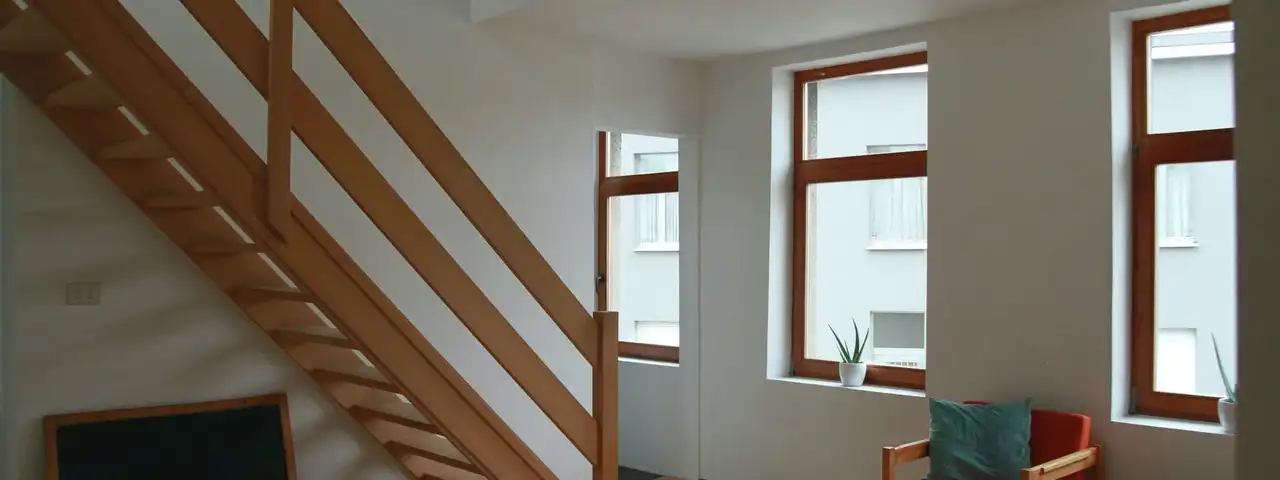
How We Build: Data-Led Decisions, Work You Can See.
This page explains, step by step, how a RumahHQ Development Sdn Bhd project moves from a piece of land to the keys in your hand: why we check demand before we build, what our AI systems do (and what they never decide), which government approvals every housing project needs, how construction is carried out, and what happens after handover.
Terms are explained the first time they appear. If you are a first-time buyer, read from top to bottom; if you only want one topic, use the headings.
The industry's problem
Too many homes are built on assumptions rather than proven demand. The result is completed homes that do not sell, and buyers who find out too late that they cannot get financing.
The National Property Information Centre (NAPIC), under the Valuation and Property Services Department (JPPH), counts "completed but unsold" homes every half-year. By its definition, a unit is counted when it has been built, has received its Certificate of Completion and Compliance (CCC), and is still unsold more than nine months after it was launched for sale.
Behind every unsold unit is money tied up in a building nobody lives in. For buyers, the related problem is financing: many people choose a home first and only then learn how much LPPSA or a bank will lend. Our model is designed to tackle both problems at the start, not at the end.
Completed but unsold homes
In the first half of 2026 (H1 2026), NAPIC recorded 33,094 completed but unsold residential units across Malaysia, up 23.0% on H1 2025 (26,911 units). Selangor accounted for 4,185 units.
Demand first: we listen before we build
Demand first is the rule every RumahHQ project will follow. It has three parts:
-
1
Every project first opens a registration of interest. Buyers tell us what they want and check their financing readiness.
-
2
A project launches only when registrations from qualified buyers reach at least 1.5 times the number of homes. For 40 homes, that means at least 60 qualified registrations.
-
3
Construction starts only when sales and financing thresholds are met, so the project can be completed.
The demand-first flow
The diagram shows the order of events for a buyer. Each step must be complete before the next begins.
- Register interest You fill in the free Daftar Minat (registration of interest) form. It is non-binding and does not reserve a unit.
- Financing readiness check Your details are checked against LPPSA or bank financing rules, so you know early whether you are likely to qualify.
- 1.5x threshold We count registrations that passed the check. The project moves forward only at 1.5 times the number of homes or more.
- Launch Sales open once the approvals and permits the law requires are in place. This is when a sale and purchase agreement can be signed.
- Construction Building starts when the sales and financing thresholds are met, then progress is reported publicly.
Terms used above
- Daftar Minat
- Registration of interest. A free, non-binding form telling us you are interested. It is not a purchase and reserves no unit.
- Qualified registration
- A registration that has passed our financing readiness check. It is not a loan approval: only LPPSA or the bank can approve financing.
- SPA
- Sale and purchase agreement. For a landed home from a developer, the form is set by law (Schedule G of the Housing Development Regulations 1989).
- Launch
- The point at which a project opens for sale.
Example: a 40-home project
Hypothetical figures to show how the rule works. 40 homes x 1.5 = a threshold of 60 qualified registrations.
Suppose 72 people register interest and 58 of them pass the financing readiness check. The project has 58 qualified registrations, below the threshold of 60, so it does not launch yet. Registration stays open, free and non-binding.
When qualified registrations reach 60, the project meets the launch threshold. Each person who registered still decides freely whether to buy.
Our AI operating system
People make the decisions; AI helps. Our systems bring the data together so decisions are faster and better informed.
-
Land evaluation
Screening land for access, utilities, flood risk and distance to schools, clinics and workplaces.
-
Feasibility and costing
Layouts, unit yields and cost estimates prepared from our own construction records.
-
Approvals tracking
Every submission and deadline tracked, so delays are seen early.
-
Site reporting
For every project, progress will be recorded on site every day, the basis of its public progress page.
-
Handover
A handover checklist and defect tracking until each item is closed.
What AI does, and what people decide
| Task | What AI and data do | Who decides |
|---|---|---|
| Demand signals | Groups Daftar Minat registrations by area, type of home and financing readiness | Our team decides whether and when a project launches |
| Pre-qualification | Organises the details you give and flags missing documents; calculators show estimates only | Financing is always approved by LPPSA or the bank |
| Scheduling and approvals | Tracks every submission, deadline and site activity, and flags delays early | The project team re-plans the work |
| Progress reporting | Turns daily site records and photos into updates for the public progress page | The site team confirms what was recorded |
| Aiman, our AI assistant on WhatsApp | Answers common questions, logs defect reports and gives you a reference number | Our team inspects and schedules each repair |
Personal data you give us is handled as set out in our privacy notice. Read the privacy notice.
From land to keys: the development stages
A housing project passes through the stages below. Some run side by side (for example, Daftar Minat can open while approvals are in progress), but none can be skipped.
- Land and feasibility The land is screened for access, utilities, flood risk and nearby facilities, and a feasibility study estimates the layout and number of homes.
- Land status If the land's use category or conditions do not allow housing, the owner applies to the State Authority to change them (land conversion under the National Land Code). Subdivision into individual lots follows where needed.
- Planning permission The local planning authority must approve the development before it starts (Town and Country Planning Act 1976).
- Building plans The local authority must approve the building plans in writing before anything is built (Street, Drainage and Building Act 1974).
- Daftar Minat and financing check Buyers register interest and check financing readiness. This can run alongside the approval stages.
- Launch and sale Sales open at 1.5 times qualified registrations or more, and only when the developer holds the licence and advertising and sales permit the law requires. Buyers sign the statutory SPA.
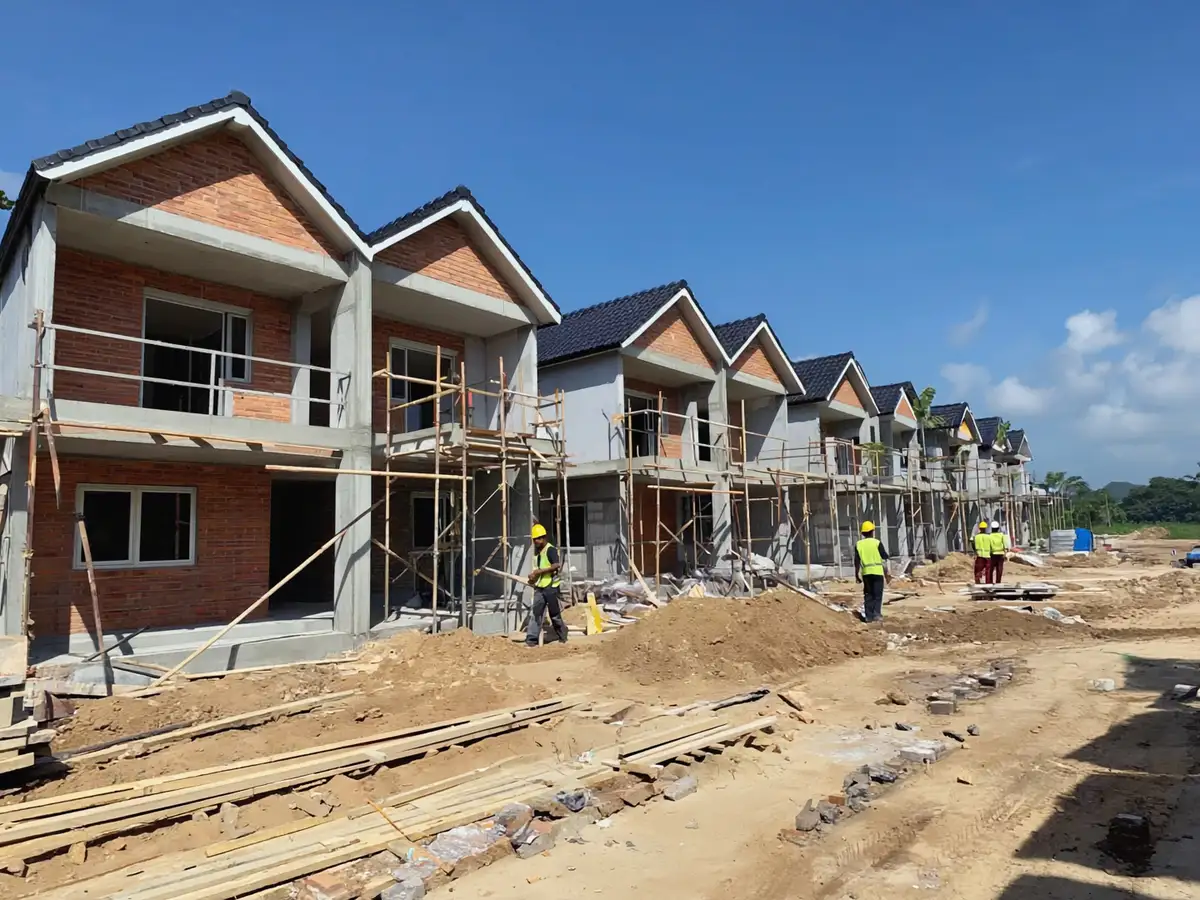
- Construction Work proceeds stage by stage: foundation, structure, walls, roof and services, finishes, then sewerage, drains and roads. Each stage is certified by the professionals responsible.
- Certificate of Completion and Compliance (CCC) When all stage certifications are complete, the Principal Submitting Person (PSP), the lead professional who submits the plans, issues the CCC, confirming the building was completed and complies with the approvals.
- Vacant possession and keys The developer notifies you to take vacant possession (VP). VP comes with the CCC, water and electricity ready for connection, and the keys.
- Defect liability period For 24 months after VP, defects you report in writing must be repaired by the developer at its own cost.
Construction stages and the statutory payment schedule
For a landed home, the statutory SPA (Schedule G) links each payment to a completed construction stage. You pay only as the work is done, and part of the price is held back until well after handover. The table shows the percentages set by the Third Schedule of Schedule G.
| Stage | When payable | Percentage of price |
|---|---|---|
| 1 | On signing the SPA | 10% |
| 2(a) | Foundation completed | 10% |
| 2(b) | Structural framework completed | 15% |
| 2(c) | Walls completed, with door and window frames in place | 10% |
| 2(d) | Roofing, electrical wiring, plumbing (without fittings) and internal telecommunication cabling completed | 10% |
| 2(e) | Internal and external finishes completed | 10% |
| 2(f) | Sewerage works completed | 5% |
| 2(g) | Drains completed | 2.5% |
| 2(h) | Roads completed | 2.5% |
| 3 | On vacant possession, with water and electricity ready for connection | 17.5% |
| 4 | On VP, where the title in your name has been delivered | 2.5% |
| 5 | On VP, held by the developer's solicitor as stakeholder: 2.5% released after 8 months and 2.5% after 24 months | 5% |
The approvals involved
Every housing project in Peninsular Malaysia needs a series of approvals from different authorities. The table lists the main ones in the order they usually happen.
| Approval | Law | Who approves | What it means for you |
|---|---|---|---|
| Change of land conditions (land conversion) | National Land Code, section 124 | State Authority, applied for through the Land and Mines Office | The land is allowed to be used for housing |
| Planning permission | Town and Country Planning Act 1976 (Act 172), section 19 | Local planning authority | The type, density and layout of the development are approved |
| Building plan approval | Street, Drainage and Building Act 1974 (Act 133), section 70 | Local authority | No building may be put up without prior written approval |
| Housing developer's licence and advertising and sales permit | Housing Development (Control and Licensing) Act 1966 (Act 118), section 5, and Regulation 5 of the 1989 Regulations | Housing Controller (KPKT) | A developer may not advertise or sell homes without them |
| Certificate of Completion and Compliance (CCC) | Act 133 and the Uniform Building By-Laws | Principal Submitting Person (a registered architect, professional engineer or building draughtsman), not the local authority | The home is complete and complies with the approvals; required before VP |
What the CCC involves
The CCC replaced the old Certificate of Fitness for Occupation. It is issued through professional self-certification: the Principal Submitting Person (PSP) issues it only after 21 stage certifications, called Forms G, are complete. Some of those forms need clearance from technical agencies such as the fire department and the water, sewerage and electricity authorities. The local authority acts as a check on the process.
Construction
For every project, we will use industrialised building systems (IBS) where they suit the design, record progress on site every day, and check quality at each stage before the next begins.
What IBS means
The Construction Industry Development Board (CIDB) defines IBS as a construction method in which components are produced in controlled conditions, in a factory or on site, then transported and installed with minimal use of workers on site. CIDB groups IBS into six categories:
- Precast concrete systems
- Metal framing systems
- Formwork systems
- Timber framing systems
- Blockwork systems
- Other IBS systems (labour-saving components)
CIDB lists the benefits as fewer workers needed on site, faster installation, quality control because components are made under controlled procedures, less material waste, better use of resources and shorter construction time. IBS is a method of building, not a lower standard: an IBS home needs the same approved plans, stage certifications and CCC as any other.
RumahHQ Development Sdn Bhd is registered with CIDB, Grade G4 (registration 0120260318-SL169289).
Buyer's checklist and common mistakes
Whichever developer you buy from, these are the mistakes we see most often, and what to check instead.
- Treating a registration of interest as a purchase. Daftar Minat is not a sale; the SPA is.
- Choosing a home before checking financing. Check your eligibility with LPPSA or your bank first.
- Not checking the developer's licence and advertising and sales permit, and that they match the project being sold.
- Not reading the SPA's payment schedule and the VP date. For a landed home under Schedule G, VP is due within 24 months of the SPA date.
- Reporting defects only by phone. Report in writing and keep a copy, with photos and dates.
- Missing the defect liability period. It runs for 24 months from VP, not from when you move in.
After the keys
Report defects to Aiman, our AI assistant on WhatsApp, or to our team. Every report will be logged and tracked to completion, and our defect reporting is published once the first project is handed over.
Frequently asked questions
Is Daftar Minat binding?
No. Daftar Minat is free and non-binding. It does not reserve a unit and you can withdraw at any time. A purchase only happens when you sign an SPA after launch.
What is a qualified registration?
A registration that has passed our financing readiness check. It is not a loan approval. Only LPPSA or the bank can approve your financing.
What happens if a project does not reach 1.5 times?
It does not launch. Your registration stays free and non-binding, and you are under no obligation.
Does AI approve my loan or decide on my unit?
No. AI organises data and flags issues. Financing is decided by LPPSA or the bank, and project decisions are made by our team.
Is an IBS home less sturdy?
IBS is a construction method recognised by CIDB. An IBS home goes through the same building plan approval, stage certification and CCC as any other home.
How can I follow a project's progress?
Every project will have a public progress page updated from site records, and transparency reports will summarise progress against plan, defects and handover times.
Sources
(8)
- NAPIC (JPPH), Laporan Status Pasaran Harta Tanah H1 2026 — read 2026-09-24
- Housing Development (Control and Licensing) Regulations 1989, Schedule G (copy hosted by REHDA Melaka) — read 2026-09-24
- PLANMalaysia Perak: Kebenaran Merancang (Akta 172, seksyen 19) — read 2026-09-24
- Majlis Bandaraya Petaling Jaya: Soalan lazim Jabatan Kawalan Bangunan (Akta 133, seksyen 70) — read 2026-09-24
- KPKT Jabatan Kerajaan Tempatan: Certificate of Completion and Compliance (CCC) FAQ — read 2026-09-24
- PTG Selangor: Permohonan Tukar Syarat Tanah, seksyen 124 Kanun Tanah Negara — read 2026-09-24
- TEDUH (KPKT): Garis Panduan Permohonan Permit Iklan dan Jualan (Permit Baharu) — read 2026-09-24
- CIDB: Industrialised Building System (IBS) — read 2026-09-24